UAV Icing at the Aircraft Icing Forum

I’m incredibly honoured to be invited to speak at the upcoming Aircraft Icing Forum, a recurring monthly forum that brings together experts from research, industry, and regulatory bodies to discuss aircraft icing technologies, certification, and operational challenges – hosted by the FAA and NASA.

The Aircraft Icing Forum plays a unique role in the icing community by providing a continuous space for open technical exchange—something that is increasingly important as aviation expands into new operational domains. I’m grateful for the opportunity to contribute to these discussions with a focus on UAVs and emerging aircraft concepts.

Why “new frontiers” of aircraft icing?

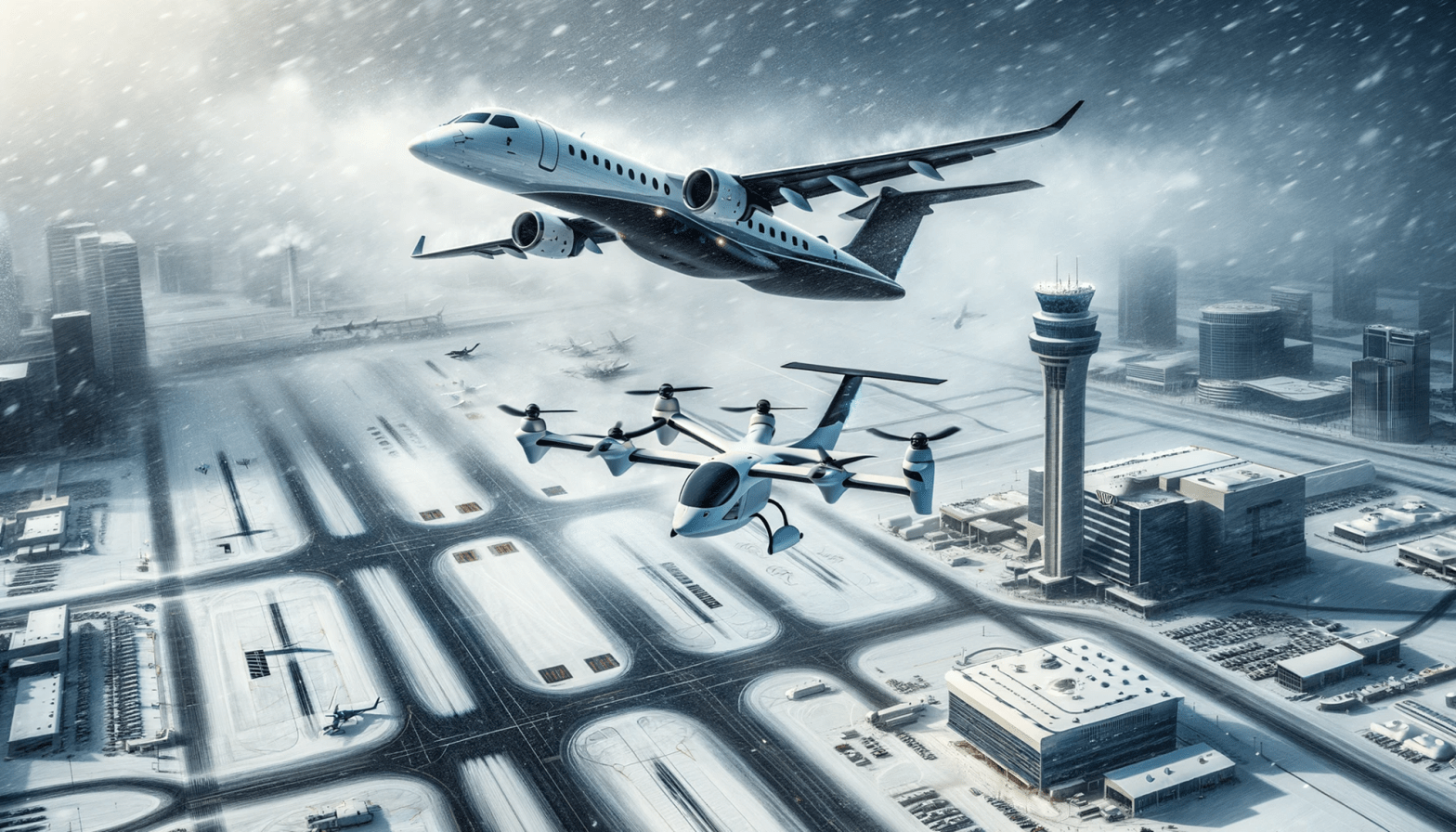
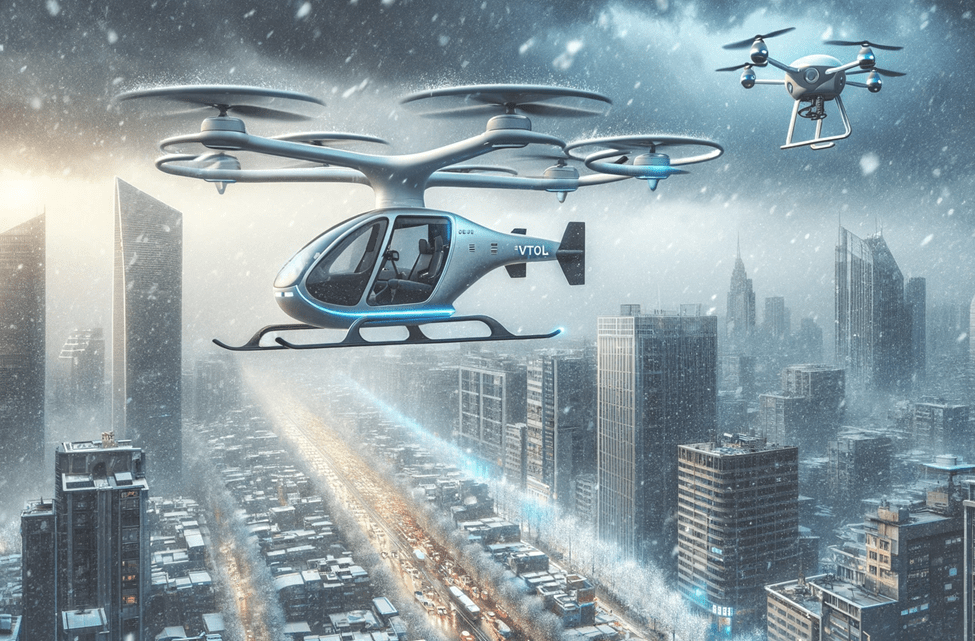
Unmanned aerial systems (UAVs), eVTOL platforms, urban air mobility concepts, and zero-emission aircraft are rapidly expanding aviation into a new future. Along with new capabilities and mission profiles, these aircraft introduce a new frontier of icing challenges.

Unlike conventional aircraft, many emerging platforms:

  • Operate with very limited power and mass margins,
  • Rely heavily on electrification and autonomy,
  • Feature non-traditional configurations (distributed propulsion, small propellers, novel airframes), and
  • Fly in operational environments where icing exposure cannot always be avoided.

These factors fundamentally change how icing affects performance, safety, and system design—and they demand new technical solutions rather than direct adaptations of legacy approaches.

What I’ll cover in the talk

My presentation, titled “New Frontiers of Aircraft Icing: UAVs and Beyond”, will provide a broad introduction to how icing manifests on UAVs, eVTOLs, and emerging aircraft, and why established icing paradigms must be re-examined for these platforms.

Using UAV icing as a central example, the talk will highlight:

  • How icing physics, aerodynamics, and system impacts differ for small, electrically powered, and highly autonomous aircraft
  • Why new modelling, detection, and protection technologies are required to meet safety and operational needs
  • Recent advances in UAV icing research, including experimental methods and system-level approaches
  • Ongoing international initiatives and key open questions that must be addressed to enable safe and scalable operations across this rapidly evolving landscape

The goal is not only to share recent progress, but also to stimulate discussion around where the community should focus next, particularly at the intersection of technology development, certification, and operations.
Aerodynamic challenges of UAVs with thermal de-icing systems

** NEW PUBLICATION ** Operating drones in cold weather causes multiple challenges. Atmospheric in-cloud icing is one of them. Aircraft are often grounded during potential icing conditions because of significant performance degradation caused by ice accretion.
Ice protection systems (IPS) are one way to mitigate icing-induced performance degradations and to open the atmospheric flight envelope. However, IPS do not necessarily prevent performance degradations completely. For this study, we looked at potential performance degradations that can occur even when operating an electrothermal de-icing system on a UAV wing. Electrothermal describes that the aircraft skin is heated using electrical energy. De-icing systems allow some ice accretion before removing the ice, contrary to anti-icing systems that prevent any ice accretion.

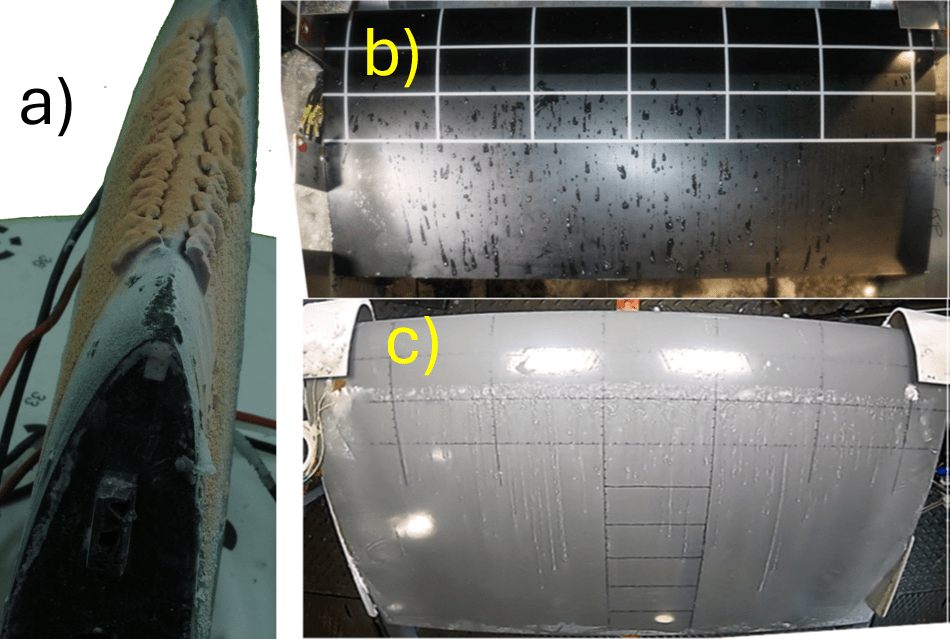
Setup – Two common types of ice accretion with a thermal de-icing system are intercycle and runback icing. Intercycle ice is the accretion that grows before the system is activated to remove the ice. An example of an intercycle ice shape after four minutes is shown below. Runback ice typically grows downstream of the heated areas. When the wing is heated, some of the meltwater will flow downstream and re-freeze in unheated areas. Runback ice can occur as dispersed spots of ice or as spanwise ice ridges.

Different ice shapes: a) An intercycle ice shape after 4 minutes; b) Dispersed runback ice; c) A spanwise ice ridge.

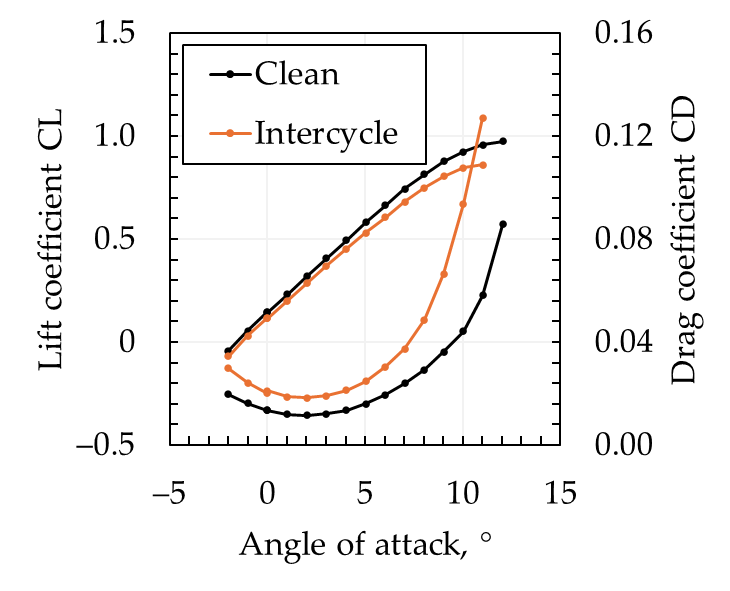
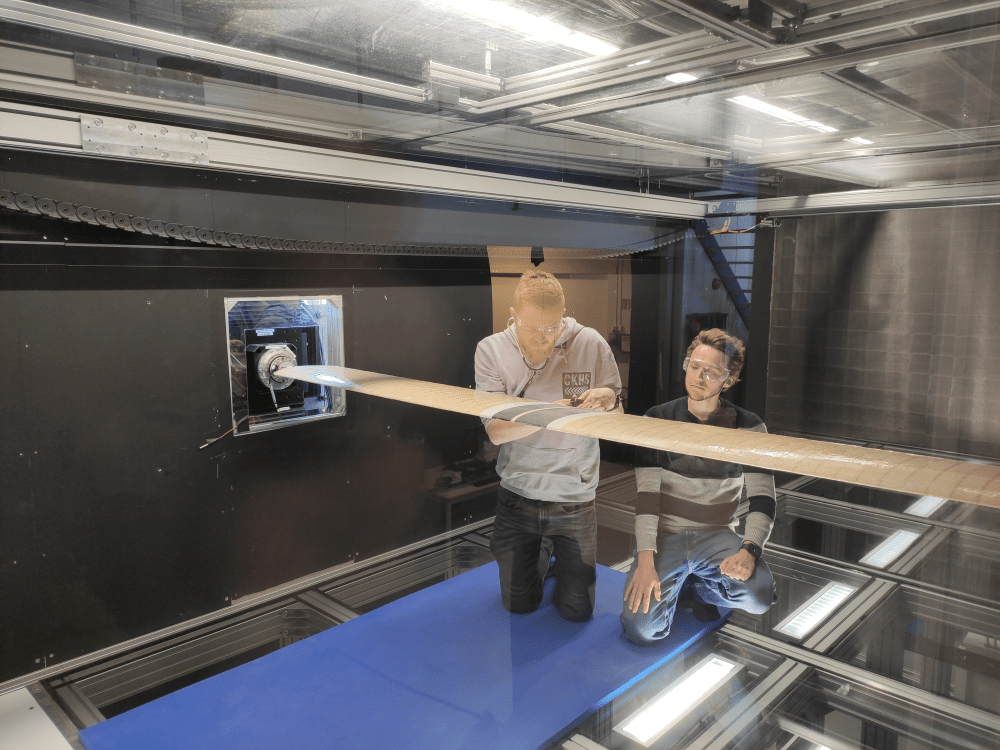
Our study investigated the changes in lift coefficient, drag coefficient, and stall angle caused by ice accretions. Experimental wind tunnel tests and numerical simulations were conducted. The wind tunnel tests were performed at the low-speed wind tunnel at NTNU. An RG-15 wing with a chord length of 0.3 m and 2.65 m span was tested at 10 m/s. Numerical simulations were conducted with Ansys FENSAP-ICE, a state-of-the-art icing simulation tool.

Results – The intercycle ice shape results in a degraded aerodynamic performance compared to the clean wing. At the realistic cruise angle of attack of 4°, the drag is increased by 58%, and the lift coefficient is reduced by 9%. This means that the aircraft would have to increase its thrust by 58% to continue its flight when flying with the intercycle ice shape compared to a clean aircraft.

The aerodynamic influence of runback ice depends significantly on the type of ice that grows. Dispersed runback ice spots reduce the lift coefficient by 2% and increase the drag coefficient by 32% compared to the clean wing at 4° angle of attack. A spanwise ice ridge reduces the aerodynamic performance more significantly. The drag coefficient at 4° angle of attack is increased by 177%, while the lift coefficient is 16% lower than in the clean case. If the UAV is intended to continue its flight in icing conditions, it would need almost three times as much thrust with the spanwise ice ridge than without. This is particularly significant because the ice ridge will likely grow in an unprotected area. Hence, the only way to remove the spanwise ice ridge would be to fly into areas with a temperature above freezing long enough to melt the ice.

Summary – Knowing the performance degradation in icing conditions is important for manufacturers and operators of UAVs and IPS. Because drones do not have much electric energy available, energy efficiency is key. This study showed that:

  • Spanwise ice ridges must be prevented because of the large drag increase and because they grow in unprotected areas.
  • Intercycle ice and runback ice cause non-negligible drag increases and must be considered when calculating the required energy of a thermal de-icing system.


Because runback ice grows in unprotected areas, removing it is difficult. Hence, avoidance strategies must be developed instead. Strategies to reduce the amount of runback ice include special coatings, less frequent de-icing, and adjusted heating layouts and sequences.

Text: Joachim Wallisch

Reference: Wallisch, J., Lindner, M., Petersen, Ø.W., Neunaber, I., Bracchi, T., Hearst, R.J., Hann, R. (2024). UAV Icing: Aerodynamic Degradation Caused by Intercycle and Runback Ice Shapes on an RG-15 Airfoil. Drones, 8(12), 775. doi.org/10.3390/drones8120775

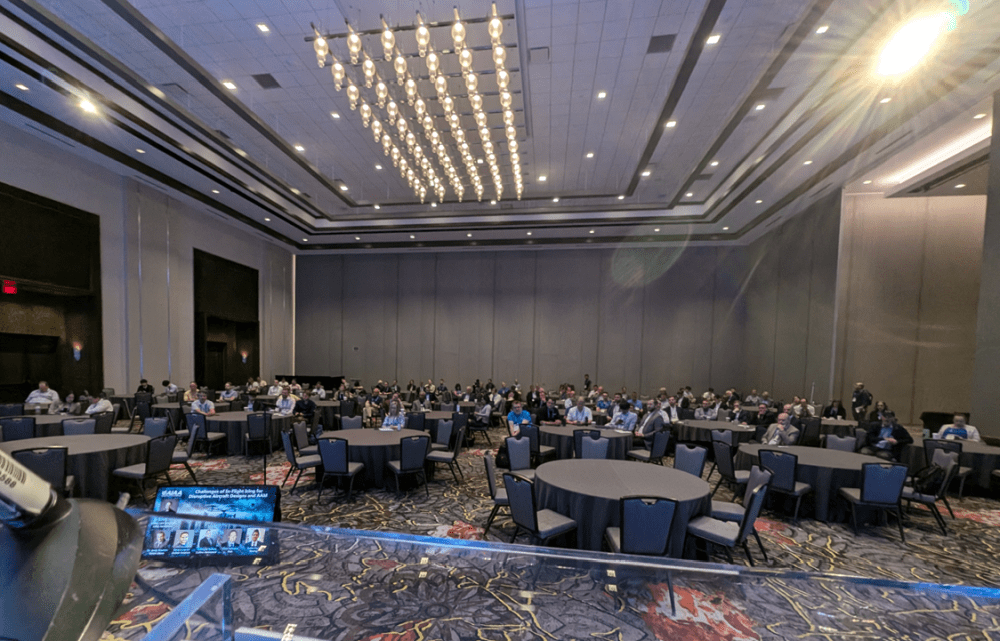
Panel discussion on challenges of icing for disruptive aircraft and AAM at Aviation Forum

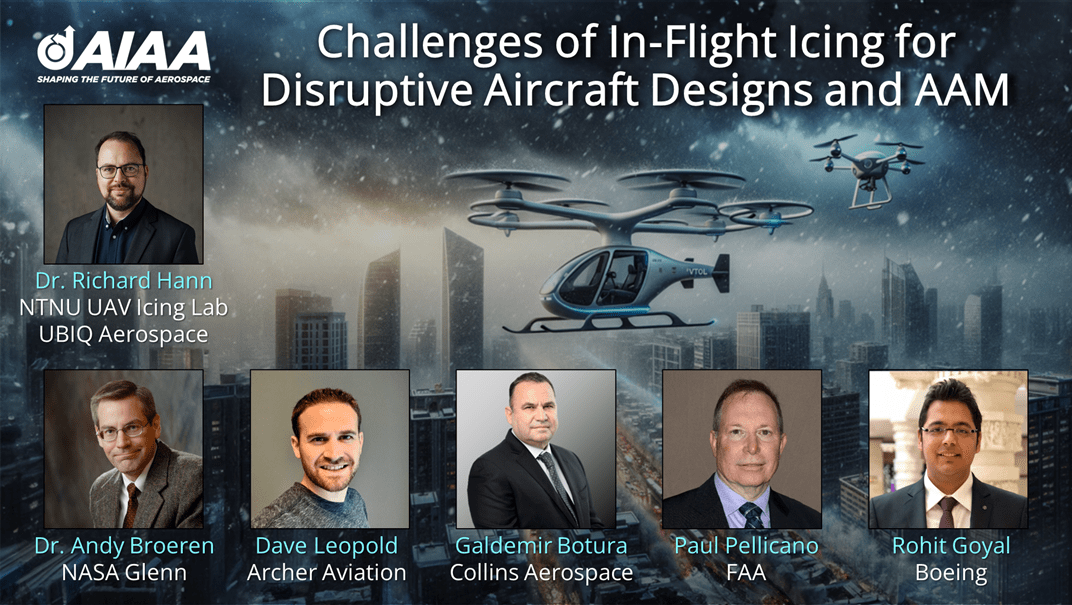
At the AIAA Aviation Forum 2024 in Las Vegas, a selected panel of experts from across the aerospace sector came together to address one of the most pressing challenges facing the industry today: the impact of in-flight icing on disruptive aircraft designs, such as fully-electric aircraft, UAVs, and eVTOLs. The panel was led by the director of the NTNU UAV Icing Lab, Dr. Richard Hann, and featured leading voices in the field, including Dr. Andy Broeren (NASA Glenn), Dave Leopold (Archer Aviation), Galdemir Botura (Collins Aerospace), Paul Pellicano (FAA), and Rohit Goyal (Boeing).

The panel discussed that as the aerospace industry accelerates towards advanced air mobility (AAM) and new aircraft configurations, the traditional understanding of in-flight icing and its mitigation is being pushed to its limits. The discussion highlighted that with these novel aircraft designs, the industry is venturing into uncharted territory—what the panel referred to as “unknown unknowns.” These unknowns encompass a range of new challenges that are emerging as the industry strives to meet the demands of next-generation aviation. One of the most critical takeaways from the panel was the pressing need for research to address these emerging challenges. The complexity of these new aircraft designs, combined with the lack of historical data, has created a knowledge gap that the industry must urgently fill. The panelists emphasized the necessity of targeted research and collaboration to better understand the icing phenomenon as it relates to these innovative platforms.

Another key point of discussion was the uncertainty surrounding the certification roadmap for these advanced aircraft. The current certification requirements, designed for traditional aircraft, may not adequately address the unique vulnerabilities of eVTOLs, UAVs, and other new configurations. The panel called for more specific requirements and the development of icing envelopes tailored to these designs, stressing that regulatory bodies need to support this research to ensure safety without stifling innovation. Innovation is undoubtedly at the heart of the solutions being proposed to tackle these challenges. However, the panelists also acknowledged that while there are many promising ideas, they often lack the maturity needed for practical application.

In conclusion, the panel at AIAA Aviation Forum 2024 underscored the importance of a collaborative approach to address the “unknown unknowns” in in-flight icing for advanced aircraft. As the industry moves forward, continued dialogue between industry leaders, researchers, and regulatory bodies will be crucial to develop the necessary technologies and frameworks to ensure the safe and reliable operation of these next-generation aircraft. The forum served not only as a platform for knowledge exchange but also as a call to action for the entire aerospace community to work together in overcoming these emerging challenges.

UAV icing at the AIAA Aviation 2024 Forum

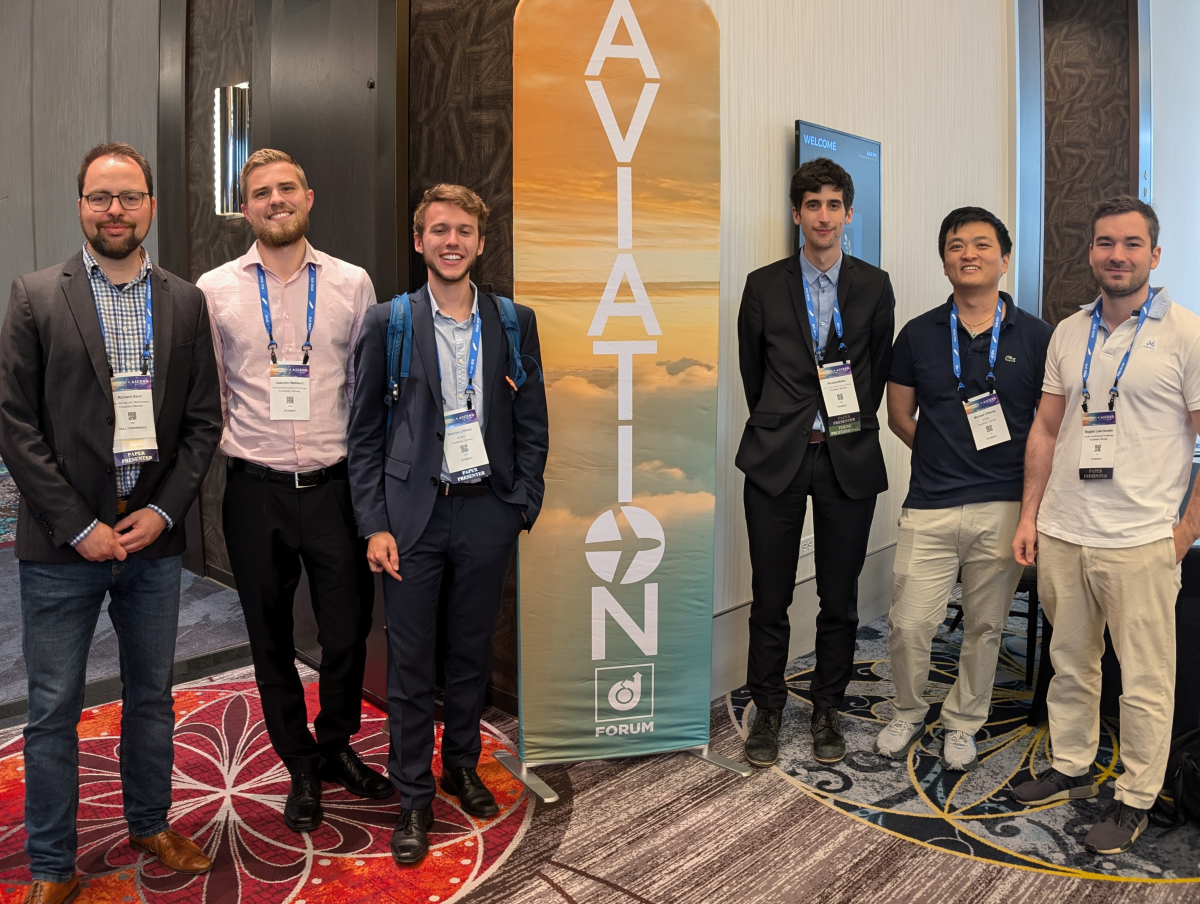
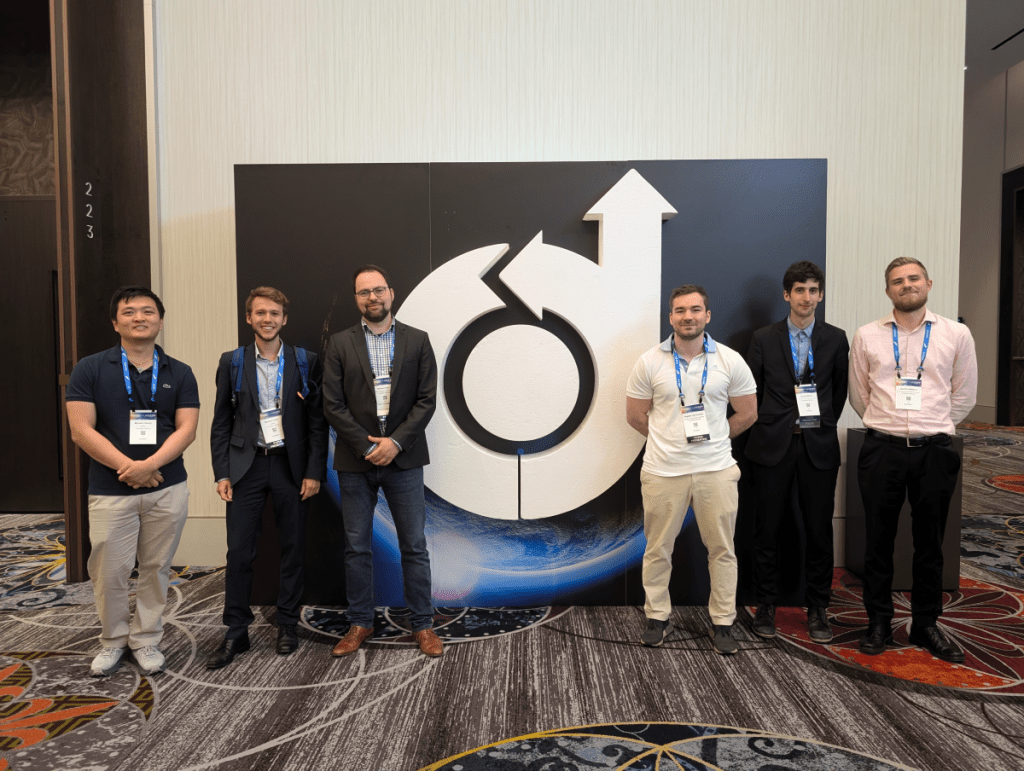
Last week, the AIAA Aviation Forum 2024 took place in Las Vegas, with over 2,900 attendees from more than 41 countries. The UAV Icing Lab participated and presented the latest developments in the field of UAV icing. The following papers with involvement from the lab were presented at the conference:

  • Hann, R., Müller, N.C., Wallisch, J. (2024). UAV Icing: Impact Testing of Ice Fragments on a Propeller. AIAA 2024-4352. AIAA Aviation Forum and Ascend. doi.org/10.2514/6.2024-4352
  • Müller, N.C., Hann, R. (2024). UAV Icing: Validation of an Ice Protection System Design for a Propeller. AIAA 2024-3568. AIAA Aviation Forum and Ascend. doi.org/10.2514/6.2024-3568
  • Løw-Hansen, B., Hann, R., Johansen, T.A, Deiler C. (2024). Time-Domain System Identification and Validation of Small Fixed-Wing UAV Dynamics. AIAA 2024-4653. AIAA Aviation Forum and Ascend. doi.org/10.2514/6.2024-4653
  • Linder, M., Hann, R. (2024). UAV Icing: Comparison of Simulated 3D and 2D Ice Accretion on Wings. AIAA 2024-4451. AIAA Aviation Forum and Ascend. doi.org/10.2514/6.2024-4451
  • Laurendeau, E., Blanchet, M., Zayni, M.K., Hann, R., Radenac, E., Mussa I, Pueyo A. (2024). Summary From the 2nd AIAA Ice Prediction Workshop. AIAA 2024-3604. AIAA Aviation Forum and Ascend. doi.org/10.2514/6.2024-3604

RCN support for the 2nd UAV Icing Workshop

We are thrilled to announce that the Norwegian Research Council (RCN) will be supporting our 2nd International UAV Icing Workshop with a grant of 100,000 NOK. The workshop will be held in Trondheim 03-04 December and organised by the UAV Icing Lab. This funding will allow us to keep the event free for all attendees, ensuring broad participation and knowledge sharing. With RCN’s support, we are excited to enhance the workshop experience, offering more sessions and networking opportunities for professionals in the UAV industry. We thank the RCN for their support in advancing UAV technology and safety!

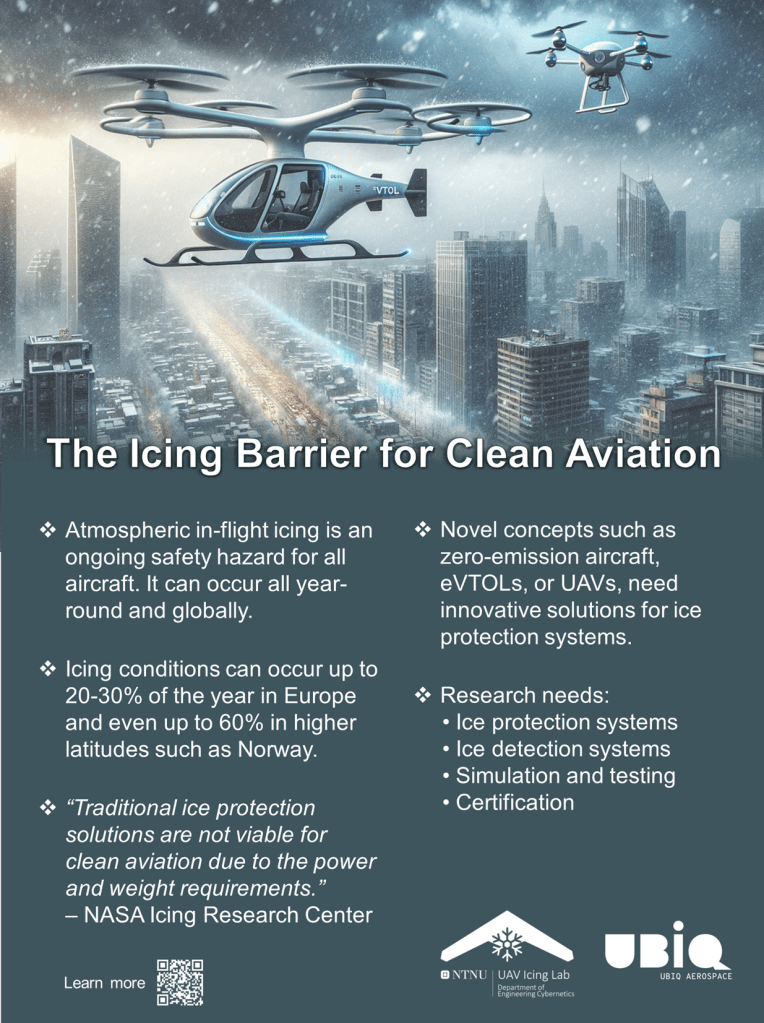
Exploring New Frontiers: Icing Research for Green Aviation

The NTNU UAV Icing Lab has obtained funding for a new research project in collaboration with UBIQ Aerospace. Together, they have received 9.1MNOK (0.8MEUR) in funding from the Norwegian Research Council for an innovation project with the title Zero Ice Shield: D•ICE Ice Protection for Aviation’s Green Evolution.

The project’s motivation is the development of new mobility solutions for aviation, transitioning towards green technologies like electric, hybrid, or zero-emission aircraft. These emerging green aircraft concepts, while still under development, will play a pivotal role in reducing emissions within the aviation sector and achieving climate goals. However, as these aircraft concepts are becoming more and more technically mature and commercially viable, they need to address an ongoing threat to aviation safety: in-flight icing.

Today’s ice protection systems are designed primarily for conventional large passenger transport aircraft (airliners) with large, power-intensive engines. Traditional ice protection systems do not align with the stringent size, weight, and power constraints required for novel zero-emission aircraft concepts. The mismatch highlights a pressing need for innovation in ice protection technologies – an innovation that will be addressed with the current research project.

Together, UBIQ Aerospace and the NTNU UAV Icing Lab, will adapt and develop UBIQ’s existing D•ICE electrothermal ice protection system and ice detection to be suitable for zero-emission large passenger aircraft. The project will furthermore focus on certification requirements for such technologies and conduct experimental testing in icing wind tunnels and flight.

Advancing UAV Safety: Electro-Thermal Ice Protection for Propellers

In a recent presentation at the AIAA SciTech Forum and Exposition in Orlando, master student Markus Frey had the pleasure of representing the NTNU UAV Icing Lab. In this session, we explored innovative research set to revolutionize the safety and reliability of Unmanned Aerial Vehicles (UAVs) operating in challenging weather conditions. The focus was an Electro-Thermal Ice Protection System (ETIPS) designed specifically for UAV propellers, integrating both experimental and numerical investigations.

Propeller Sensitivity to Ice Accretion:

Propellers, with their high rotation rates and small size, are particularly sensitive to ice accretion. The consequences include a substantial reduction in thrust generation, increased torque, and potential dangers associated with ice shedding. Traditional ice protection systems, well established in manned aviation, present unique challenges when adapted for UAVs due to energy limitations and strict mass constraints. Our research is focused on ETIPS, specifically designed for UAV propellers. These systems operate on the principle of resistive heating, keeping the critical surface spots above the freezing temperature.

Balancing Act – Ice-Free Propellers and Structural Integrity:

One often-overlooked aspect in anti-icing investigations is the thermal impact on propeller structures, particularly those made from composite materials. While composites offer advantages in terms of weight, stiffness, and strength, they are sensitive to high structural temperatures. The delicate balance between electro-thermal heating to keep propellers ice-free and preserving the structural integrity of composite materials presents a major challenge.

Experimental and Numerical Investigations:

Our study builds on previous research and introduces protected propellers for experimental analyses, aiming to provide a more comprehensive examination of the internal temperature distribution. The goal is not only to keep the propeller surface ice-free but also to maintain low internal temperatures, ensuring the longevity of composite materials. Numerical conjugated heat transfer simulations, utilizing ANSYS FENSAP-ICE, play a crucial role in predicting temperature distributions within the propeller. These simulations, validated against literature and the experimental data, provide insights into the ETIPS performance under realistic in-flight conditions.

Two Optimization Strategies:

In optimizing our Ice Protection System, two key strategies emerge from our study. The first involves integrating additional ETIPS modules along the propeller’s surface, strategically placed between the glass fiber layers. This aims to maintain more of the upper surface above freezing temperatures, preventing runback ice accumulation. The second strategy explores the impact of material composition, specifically introducing a thin copper layer into the propeller structure. This alteration enhances heat conductivity, reducing heat resistance, and improving both ice prevention and heat dissipation. These strategies, guided by numerical simulations aligned with experimental conditions, offer promising results for enhancing the effectiveness of ETIPS and ensuring safer UAV operations in challenging weather conditions.

Conclusion:

In summary, our research on ETIPS for UAV propellers introduces innovative strategies. By incorporating additional ETIPS modules and exploring material enhancements like a thin copper layer, we aim to improve ice prevention and heat distribution. These findings contribute to the ongoing effort to enhance the operational safety of unmanned aerial vehicles in challenging climate conditions. Our research takes us a step closer to improve ice protection systems, ensuring that UAVs work reliably.

Reference: Frey, M., Müller, N.C., Wallisch, J., Hann, R. (2023). UAV Icing: Validation of a numerical model to calculasite the Temperature of an Ice Protection System for a Propeller of a UAV. AIAA SCITECH Forum. AIAA 2024-0871.doi.org/10.2514/6.2024-0871

Text: Markus Frey

Bridging UAV Icing Innovations to Clean Aviation


Last week, our team from the UAV Icing Lab had the privilege of attending the NTNU Clean Aviation evening with Rolls-Royce, Avinor, and Widerøe. This event not only provided us with a deeper understanding of the latest trends in aviation technology but also opened our eyes to the significant potential for synergy between our work on UAV icing solutions and the emerging field of zero-emission aircraft.

The Challenge of Power Budget in Zero-Emission Aircraft
One of the most striking revelations from the event was the tight power budget that fully-electric or hydrogen-powered aircraft operate within, especially when compared to traditional aviation. These innovative aircraft designs are at the forefront of clean aviation, aiming to reduce emissions and revolutionize air travel. However, their success hinges on efficiently managing power consumption, a challenge where our expertise in UAV icing solutions can play a crucial role.

UAV Icing Solutions: Optimized for Efficiency
Our work at the UAV Icing Lab has always been geared towards optimizing solutions for size, weight, and power. These considerations are paramount in UAV design, where every gram and watt counts. By adapting these icing solutions, initially developed for UAVs, to clean aviation aircraft, we can significantly reduce the power consumption required for ice protection systems. This reduction is not just a technical improvement; it’s a critical step in making zero-emission aircraft feasible and viable.

The Road Ahead
Inspired by the discussions and insights gained at the NTNU Clean Aviation evening, the UAV Icing Lab is now more committed than ever to contributing actively to the clean aviation sector. We are excited to announce that we will be focusing on developing new research projects aimed at adapting our UAV icing innovations for use in zero-emission aircraft. This direction not only aligns with our expertise but also contributes to a more sustainable and environmentally friendly aviation industry.

New Advancements in Ice Protection Systems for UAV propellers 

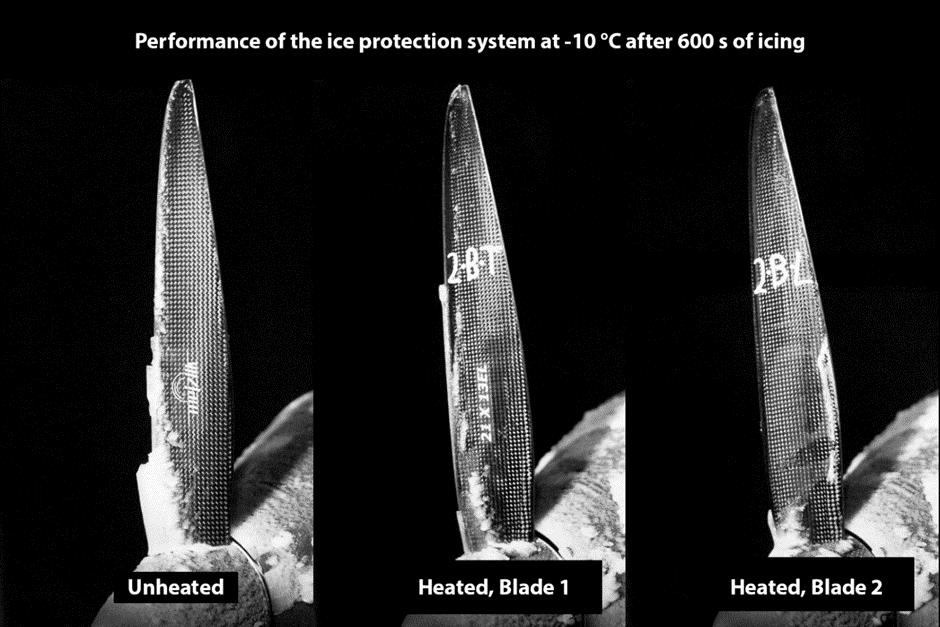
The NTNU UAV Icing Lab, together with Mejzlik Propellers, and UBIQ Aerospace have developed a system to protect the propellers of UAVs when flying in icing conditions. In clouds in cold conditions, the propeller can collect ice and reduce the aerodynamic efficiency of the propeller. The developed electro-thermal ice protection system prevents ice accretion and retains propeller performance in icing conditions. Our research opens new possibilities for safe and reliable UAV operations in challenging weather environments. 

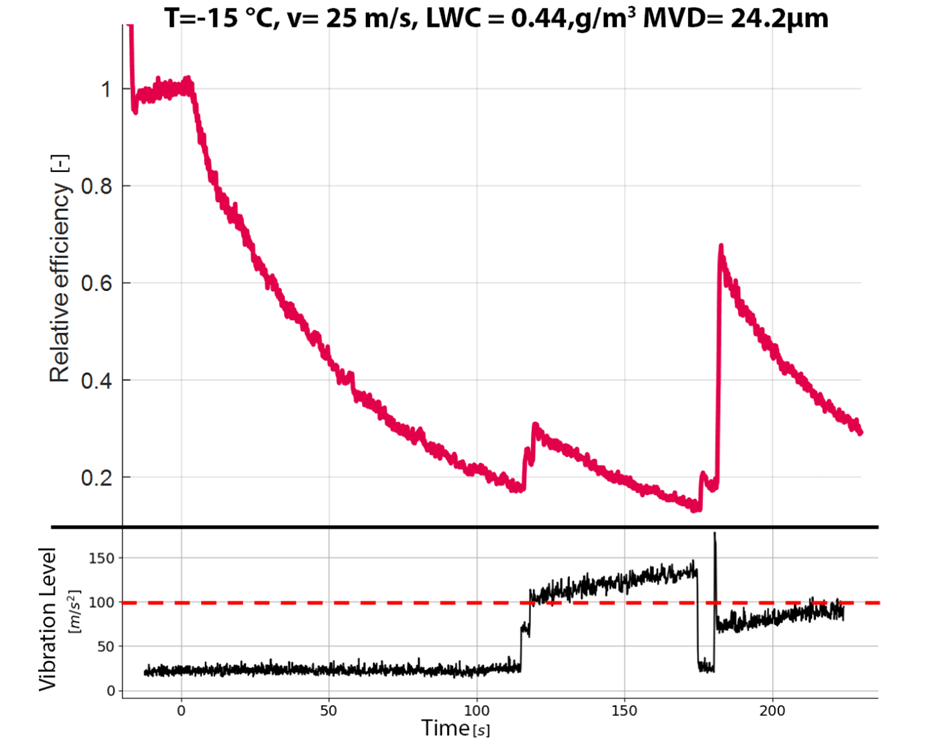
Ice accretion will decrease the propeller’s performance by disturbing the airflow around the propeller blade. This will lead to a significant loss of thrust and strong vibrations.  Propellers are very sensitive to icing and ice up very fast – within 100s the propeller can lose more than 80% of its efficiency. In addition, vibrations exceeding 10G can damage the drive train. These effects are a large hazard to the UAV and can lead to the loss of propulsion and subsequent loss of aircraft.

We used state-of-the-art CFD techniques to engineer an advanced propeller ice protection system tailored for in-flight use during icing conditions. The system incorporates carbon fiber heaters within the propeller blade, deterring ice formation and facilitating the shedding of any formed ice. 

The developed ice protection system was able to prevent ice accretion at a temperature of -5°C, and at lower temperatures, it was able to reduce the impact of atmospheric icing on the propeller significantly.   

This collaborative effort with UBIQ Aerospace, the UAV Icing Lab and Mejzlik Propellers represents the first step in developing a mature ice protection system for UAVs. This will enable UAV operations in cold-climate regions. 

Reference: Müller, N.C., Løw-Hansen, B., Borup, K.T., Hann, R. (2023). UAV icing: Development of an ice protection system for the propeller of a small UAV. Cold Regions Science and Technology, 213, 103938. doi.org/ 10.1016/j.coldregions.2023.103938

Text: Nicolas C. Müller

Reflecting on 2023

As the year 2023 comes to a close, it’s time to look back at a year filled with significant achievements and advancements in the field of Unmanned Aerial Vehicle (UAV) icing research. It has been an important year for the UAV icing research field and the NTNU UAV Icing Lab has contributed some of the key achievements.

Highlights from 2023

  1. SAE Icing Conference: This year’s SAE Icing Conference in Vienna was a landmark event for UAV icing research. It featured a record number of papers dedicated to UAV icing. Our lab proudly contributed six of these papers on a wide range of topics such as icing on wings, propellers, ice protection systems, path-planning, and ice detection.
  2. 2nd AIAA Ice Prediction Workshop: The 2nd edition of this workshop was another highlight of the year. Our lab contributed a UAV icing case with low Reynolds numbers that was featured in this important workshop. The results showcased that many ice prediction codes have substantial gaps for simulations of UAV icing cases.
  3. Collaboration with UBIQ Aerospace: Perhaps one of our most impactful collaborations of 2023 was with UBIQ Aerospace. Together, we developed an ice protection system for UAV propellers. This system was tested under moderate icing conditions and impressively maintained 70% efficiency over a 10-minute period. This success marks a significant step forward in our quest to make UAVs safer and more efficient in icy conditions.

Outlook for 2024: Expanding Horizons

As we move into 2024, the UAV Icing Lab is poised for another year of innovation and discovery.

  1. 2nd UAV Icing Workshop: Building on the success of our previous workshops, we are excited to host the 2nd UAV Icing Workshop. This will be a platform for sharing new research, fostering collaborations, and discussing the future directions of UAV icing research. More information will follow soon.
  2. AIAA Aviation Conference in Las Vegas: We are geared up for the AIAA Aviation Conference in Las Vegas, where we aim to submit six papers. Our ongoing research promises new insights and advancements in UAV icing, and we look forward to sharing these with the global community.
  3. Continued Collaborations and Wind Tunnel Tests: Our journey doesn’t stop here. We will continue our collaborations with industry partners and conduct more icing wind tunnel tests. These efforts are vital for developing more effective icing mitigation strategies and technologies for UAVs.

The NTNU UAV Icing Lab wishes you happy holidays and a good start to an exciting 2024!