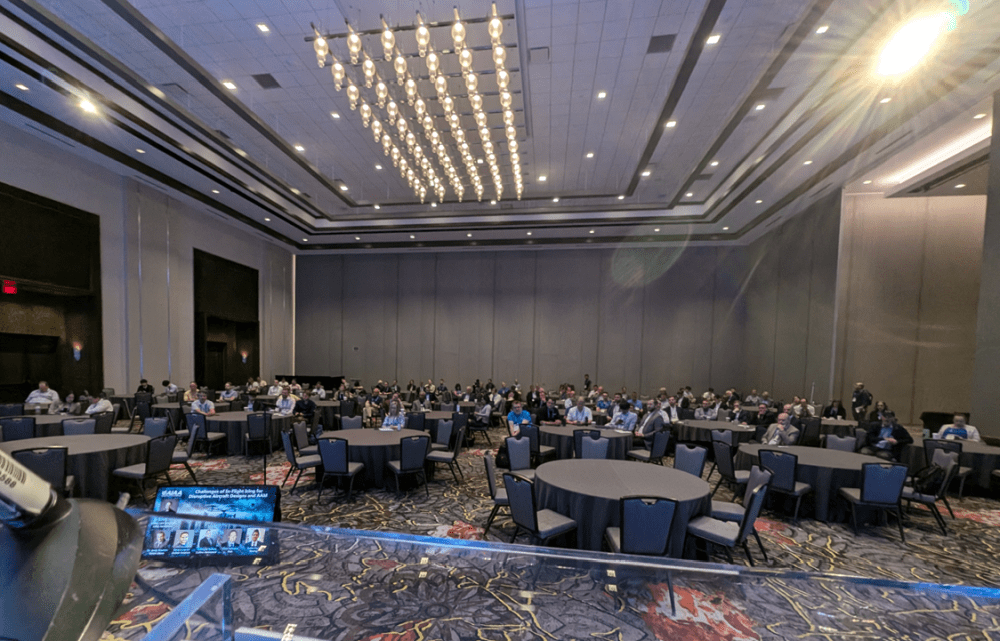
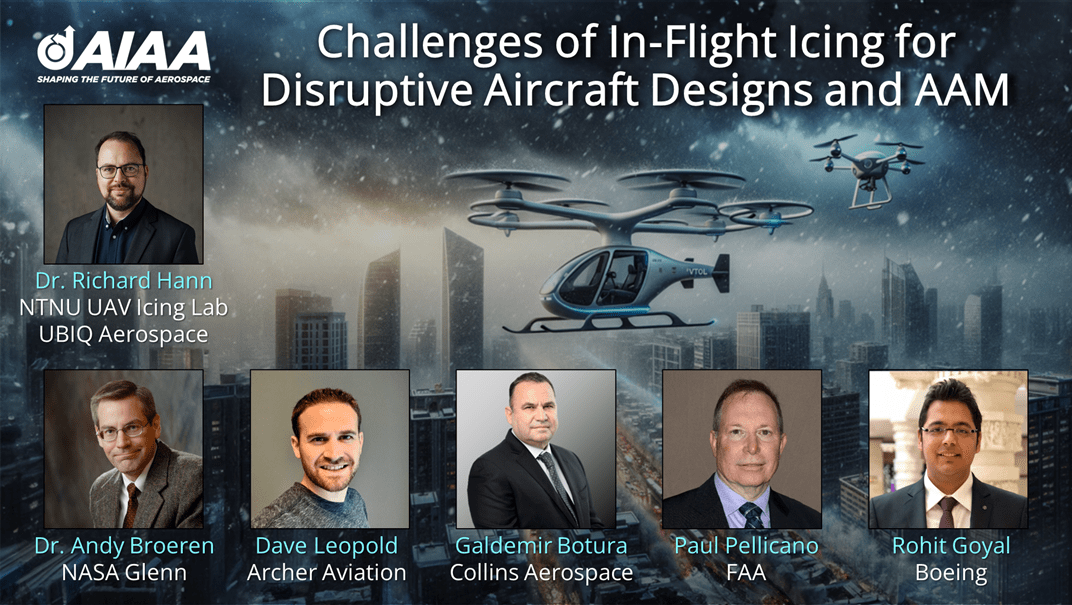
At the AIAA Aviation Forum 2024 in Las Vegas, a selected panel of experts from across the aerospace sector came together to address one of the most pressing challenges facing the industry today: the impact of in-flight icing on disruptive aircraft designs, such as fully-electric aircraft, UAVs, and eVTOLs. The panel was led by the director of the NTNU UAV Icing Lab, Dr. Richard Hann, and featured leading voices in the field, including Dr. Andy Broeren (NASA Glenn), Dave Leopold (Archer Aviation), Galdemir Botura (Collins Aerospace), Paul Pellicano (FAA), and Rohit Goyal (Boeing).
The panel discussed that as the aerospace industry accelerates towards advanced air mobility (AAM) and new aircraft configurations, the traditional understanding of in-flight icing and its mitigation is being pushed to its limits. The discussion highlighted that with these novel aircraft designs, the industry is venturing into uncharted territory—what the panel referred to as “unknown unknowns.” These unknowns encompass a range of new challenges that are emerging as the industry strives to meet the demands of next-generation aviation. One of the most critical takeaways from the panel was the pressing need for research to address these emerging challenges. The complexity of these new aircraft designs, combined with the lack of historical data, has created a knowledge gap that the industry must urgently fill. The panelists emphasized the necessity of targeted research and collaboration to better understand the icing phenomenon as it relates to these innovative platforms.

Another key point of discussion was the uncertainty surrounding the certification roadmap for these advanced aircraft. The current certification requirements, designed for traditional aircraft, may not adequately address the unique vulnerabilities of eVTOLs, UAVs, and other new configurations. The panel called for more specific requirements and the development of icing envelopes tailored to these designs, stressing that regulatory bodies need to support this research to ensure safety without stifling innovation. Innovation is undoubtedly at the heart of the solutions being proposed to tackle these challenges. However, the panelists also acknowledged that while there are many promising ideas, they often lack the maturity needed for practical application.
In conclusion, the panel at AIAA Aviation Forum 2024 underscored the importance of a collaborative approach to address the “unknown unknowns” in in-flight icing for advanced aircraft. As the industry moves forward, continued dialogue between industry leaders, researchers, and regulatory bodies will be crucial to develop the necessary technologies and frameworks to ensure the safe and reliable operation of these next-generation aircraft. The forum served not only as a platform for knowledge exchange but also as a call to action for the entire aerospace community to work together in overcoming these emerging challenges.